When a customer replies to your SMS, the dialer should know not to call them ten minutes later. In many enterprise stacks, it doesn't. The SMS platform records the reply, the dialer follows its own schedule, and the CRM receives an incomplete update after both events have already happened. The customer gets contacted twice, your team gets two sets of campaign metrics, and someone still calls the campaign multichannel.
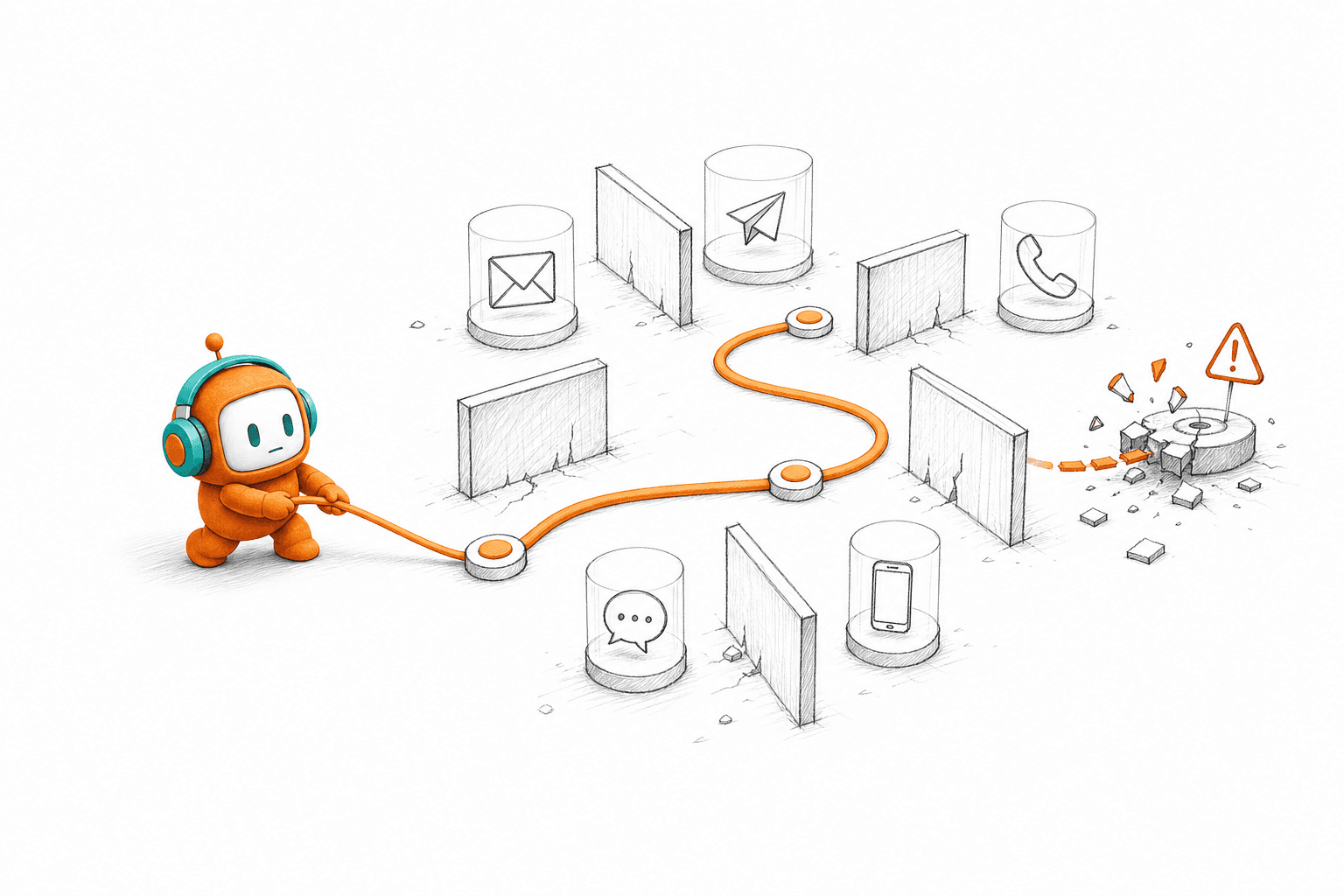
A multichannel outreach strategy fails when channels share a campaign but not the customer's current state. Adding voice, chat, email, or messaging creates more contact opportunities, but it also creates more places for context to break, opt-outs to be missed, and follow-up to continue after the customer has already responded. More channels don't fix a disconnected operating model. They expose it.
The commercial model matters here too. When pricing is tied to attempts or call duration, disconnected outreach creates a direct cost every time the system retries a customer without knowing what happened elsewhere. The real measure isn't how many calls were placed or messages were sent. It's how many customers were actually reached, and what happened next.
More Channels Do Not Create One Strategy

That distinction is where many strategies break. A team can operate across five channels without having one coordinated outreach workflow. The dialer knows whether a call connected, the messaging platform knows whether a text was delivered, and the CRM may know that a lead changed status. None of those systems necessarily knows whether the customer's problem has been resolved.
Channel coverage answers one question: where can we contact someone? Customer operations has to answer a harder one: should we contact them, what do we already know, and what action comes next? Those decisions require shared context and workflow state, not another campaign dashboard.
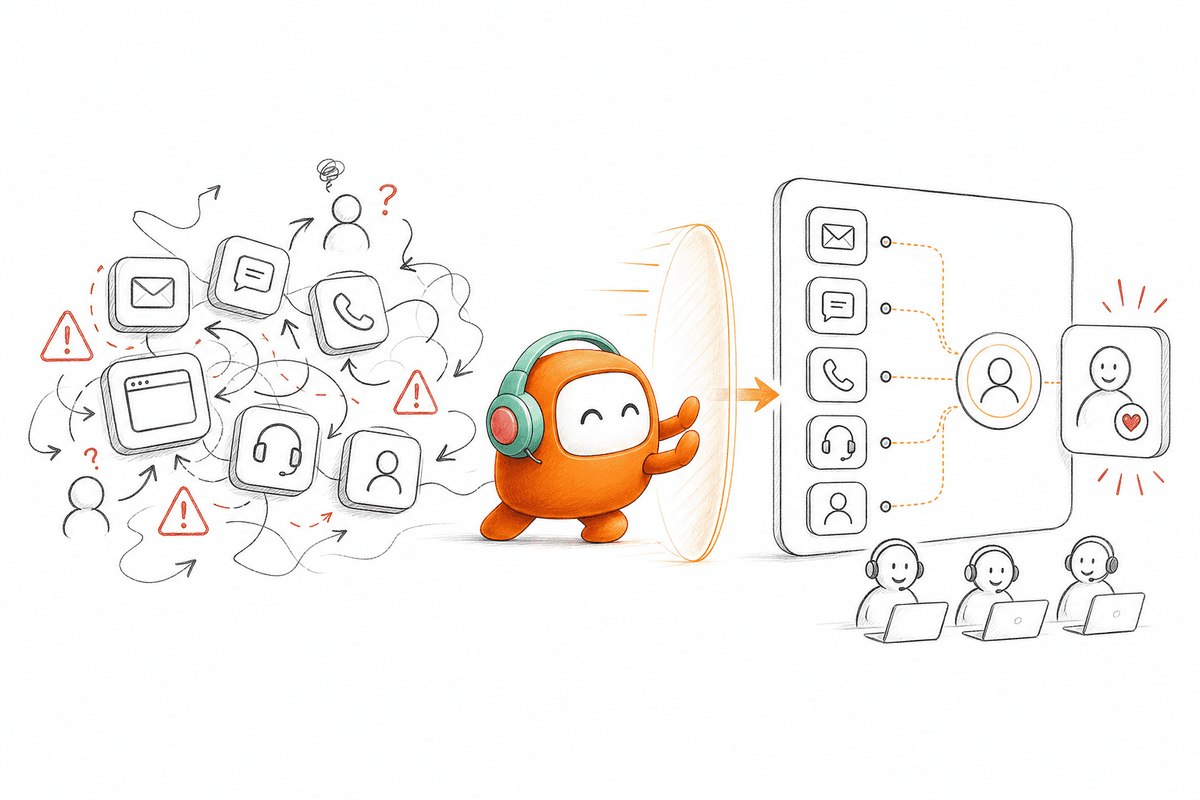
The difference becomes obvious when a conversation changes channels. A customer can ignore a call, reply through WhatsApp, and later ask for a person over voice. If every channel owns a different record, the team has to reconstruct the journey by hand, the customer may need to repeat their request, and the next automated step may run against information that is already out of date.
Where Multichannel Outreach Breaks
Each Tool Owns a Different Version of the Customer
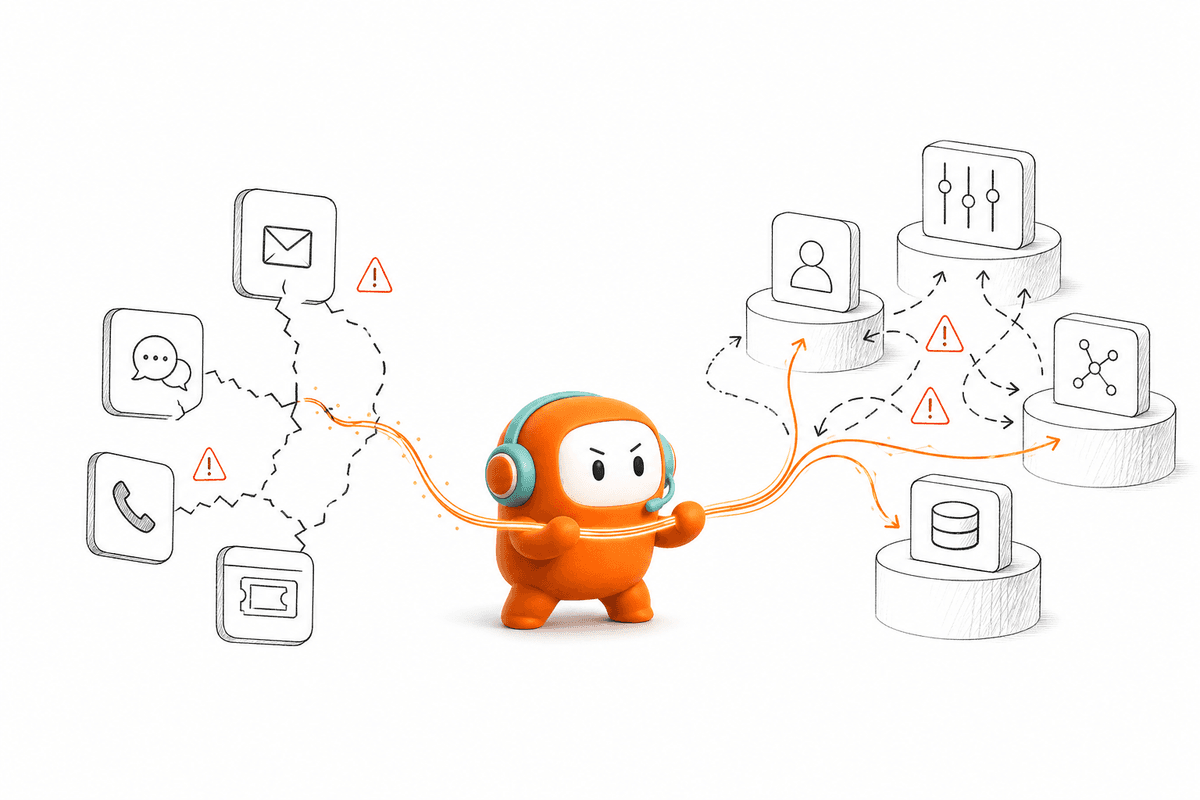
Separate tools create separate records. One system stores call outcomes, another holds message history, and the CRM contains the account status. Even when integrations exist, updates may arrive after the next campaign step has already been triggered.
A delayed or partial update changes more than reporting. It changes live behavior. A lead who has already booked can stay inside an outbound sequence, a customer who asked for human support can receive another automated message, and a contact who replied on one channel can be treated as unreachable on another.
Most teams respond by adding rules between systems, and those rules become another layer to maintain, especially when workflows change. A new channel means a new integration, new field mappings, another set of failure conditions, and another place where operations has to check whether the data actually arrived.
Campaigns Optimize Touches Instead of Customer State
Channel tools usually report only the activity they control. A dialer reports attempts and connections, an SMS tool reports sends and delivery, and an email platform reports opens and replies. Those metrics are useful, but they don't tell you whether the complete workflow worked.
Customer state is broader than channel activity. It includes whether the person responded, what they requested, whether they qualified, whether the case needs escalation, and whether further contact should stop. Without that shared state, each channel keeps optimizing its own step in isolation.
Repeated contact is often blamed on poor campaign design, but the deeper cause is usually that no system owns the whole sequence. Timing rules can reduce overlap, but they can't solve missing context. A ten-minute delay is still wrong if the customer resolved the issue nine minutes earlier.
Human Handoffs Reset the Conversation
Automation will reach its limit. A customer may ask something outside approved knowledge, show negative sentiment, or request an exception that needs human judgment. The question isn't whether escalation happens. It's whether the person receiving the conversation inherits enough context to continue it.
Disconnected stacks usually transfer the channel, not the work. An agent receives the call or message, but not always the full thread, prior history, summary, or expected next action. They start discovery again because they can't trust the information in front of them.
The reset costs time and damages confidence. Customers hear that they are being transferred, then discover that the new agent doesn't know what happened. Internally, the automation may look successful because it completed its own step, even though the human team had to redo the work.
Pricing Can Reward the Wrong Activity
A pricing model based on attempts can make poor coordination more expensive. Every unanswered call, duplicate retry, or continued sequence creates usage even when nobody has been reached. Teams then spend time comparing contact costs across vendors without seeing the total cost of the workflow.
Reached customers are a more useful commercial unit for outbound operations. A failed connection doesn't create a conversation or move the customer forward, and charging for it puts the vendor's activity ahead of the buyer's outcome.
Pricing doesn't repair workflow design by itself, but it tells you what the system is built to reward. If your multichannel program is measured and billed around activity, teams will keep producing activity even when customer state should have stopped it.
What a Working Outreach Model Needs
One Active Customer Thread
Every channel does not need to behave identically. WhatsApp templates, email threads, voice calls, and SMS each have their own formats and policies. Internally, though, those interactions need to stay tied to the same customer thread.
A shared thread gives AI agents and human agents the same history. When the customer moves from web chat to voice, the prior request stays visible. When an outbound message gets a response, the next campaign step can use that event rather than treating each touch as an isolated action.
The shared record also needs a clear current state. Has the customer replied? Was the issue resolved? Is a human now responsible? Should outbound contact continue? Channel history tells you what happened, while workflow state determines what should happen next.
A Sequence Built Around Decisions
A useful outreach sequence is not simply call, text, and email on a timer. Each step should respond to an outcome. No answer may trigger a message, a reply may stop further contact, a qualification answer may route the lead, and a sensitive request may require approval before anything is sent.
Operations teams need control over those decisions. Scripts, routing rules, timing, exit conditions, and escalation paths change as the program runs. If every revision requires engineering work or a vendor ticket, the workflow will fall behind the operating reality.
Testing matters for the same reason. Teams need to preview payloads, test scenarios, validate edge cases, and reverse a change when it introduces errors. Production outreach contains exceptions that a campaign diagram will never show.
If you want to map those decisions across your current voice and messaging workflows, book a demo and review the sequence with our team.
Human Ownership Where Judgment Is Required
AI can handle repeatable conversations and configured workflow steps. Human agents still need to own exceptions, negotiation, sensitive situations, and decisions outside the approved boundaries. A sound operating model defines that division before launch, not after the first escalation goes wrong.
Escalation criteria should reflect the actual workflow. Negative sentiment may require a person. So may an unresolved intent, a specific keyword, a customer tier, or a request that falls outside loaded knowledge. Teams should be able to define those criteria rather than leaving every handoff to model judgment.
Once escalation happens, the human agent needs the thread, summary, relevant history, and suggested next actions in the same workspace. The goal is not to hide that AI was involved. It is to stop the customer from restarting the conversation.
Controls Shared Across Channels
Consent status, contact windows, do-not-call rules, opt-outs, and approval requirements cannot live inside one channel only. A voice opt-out that doesn't stop SMS is not a channel problem. It's a governance problem.
Configured controls should be checked before contact and recorded with the interaction. Higher-risk messages can enter an approval workflow where a human reviews, edits, or rejects them. Every rule still has to reflect the organization's own policies and legal review.
No platform removes the customer's responsibility for consent, disclosure, or regulatory obligations. Regulated buyers should expect precise deployment language and clear operating boundaries, not broad claims that software makes an outreach program compliant.
How Revve Connects Inbound and Outbound Work
Revve is an AI customer operations platform, not a support bot bolted onto another helpdesk. It runs inbound support and outbound engagement on the same customer context instead of shuttling work between unrelated tools. That is the difference between five systems that happen to share a campaign and one operating layer that shares the customer.
On the inbound side, our platform provides a unified AI and human workspace with an omnichannel inbox. Conversations across supported voice and digital channels can stay tied to one customer thread. The inbox preserves history while keeping channel-specific behaviors such as templates, sessions, read receipts, and delivery status where available. Routing can then use factors such as language, skill, availability, or continuity with a previous agent.
Outbound orchestration runs configurable sequences across calls, SMS, WhatsApp, messaging, and email. Teams define the steps, timing, exit conditions, and the messaging framework. Contacts can enter through connected CRM workflows, and engagement events and outcomes can be written back through integrations, APIs, and webhooks.
AI agents work from knowledge-grounded automation, using documents, websites, and FAQs you approve. When the available knowledge doesn't support an answer, or the configured rules say a person is needed, smart escalation moves the conversation to a human with full context rather than forcing a response. The human agent receives the same thread with its summary and suggested next actions.
Operations teams can update scripts, routing, tone, business rules, and campaign sequences through no-code configuration, with preview, testing, and rollback controls that let changes be checked before or after publication. Initial integrations and infrastructure still require technical involvement, particularly for enterprise or regulated deployments. Compliance controls and approval workflows apply across channels, so opt-outs and higher-risk messages follow the same rules everywhere.
Revve offers flexible deployment and enterprise security, which matters most when the buyer's data or infrastructure requirements decide where the workload can run. Deployment choice should follow the operating model rather than a generic default. For regulated production environments, on-prem deployment can fit requirements that a standard cloud setup will not meet.
How to Diagnose Your Current Stack
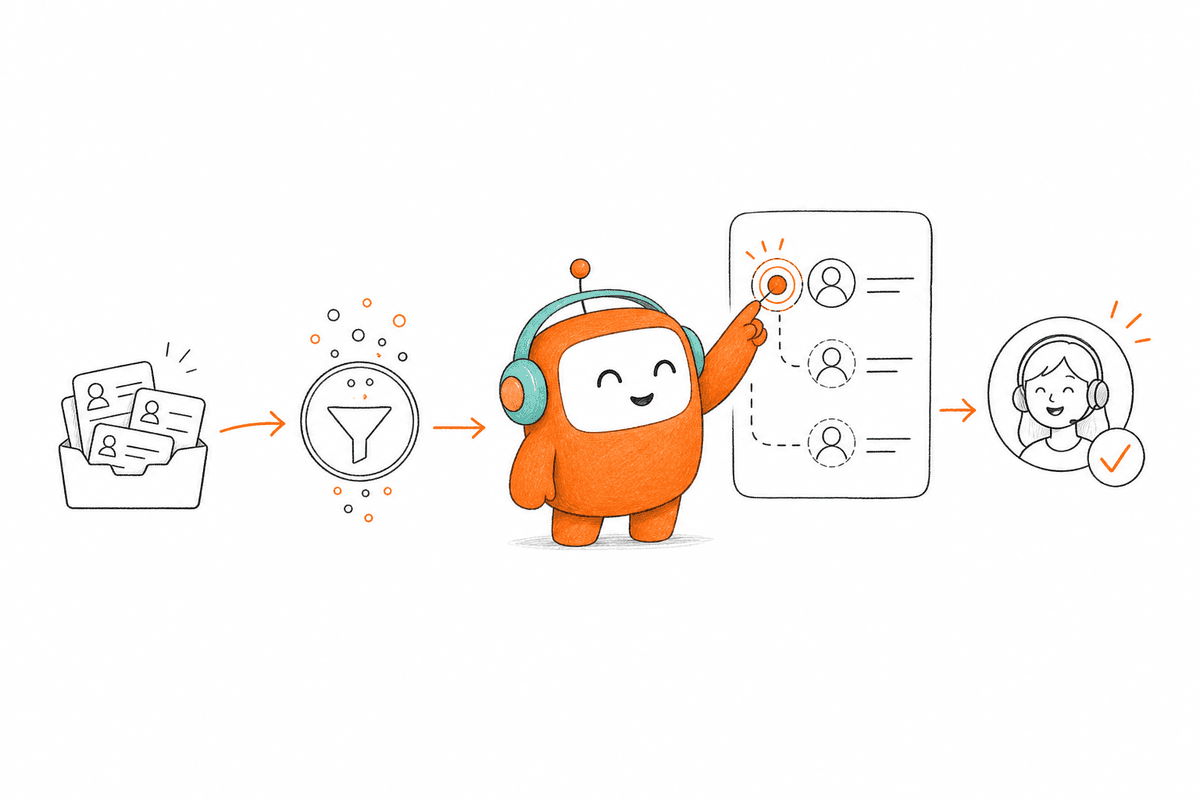
A platform change should start with the workflow, not the vendor list. Pick one customer journey, such as lead follow-up, a service reminder, payment recovery, or an unresolved support request. Then trace what each system knows after every step.
Ask the following questions:
- Does a reply on one channel stop scheduled outreach on the others?
- Can every agent see the complete customer thread?
- Does the workflow track customer state, or only channel events?
- Can AI escalate with its history, summary, and next action intact?
- Can operations change routing and exit conditions without waiting for engineering support?
- Are opt-outs and approval rules evaluated across the full sequence?
- Does reporting show completed outcomes, not only sends and attempts?
- Does pricing count failed connections as usage?
Any "no" identifies a specific operating gap. It does not automatically mean every tool must be replaced. Some companies already have channel infrastructure or systems of record that should stay in place. The goal is to decide which system owns the conversation, the workflow state, and the handoff between AI and people.
CRM, billing, banking, policy, marketing, and BI systems can keep doing their existing jobs. Revve does not need to replace them. Its role is to run the customer-facing work around those records: answering, routing, following up, qualifying, escalating, and handing the conversation to a person when judgment is required.
When Consolidation Is Not the Right Move
A full customer operations platform is too much for some teams. A small company with low conversation volume may find that a basic inbox and a human team are cheaper to operate. A business that only needs a homepage FAQ widget may get what it needs from a focused point product instead.
The same applies to teams shopping only for programmable calling or transcription. If they don't need ticketing, shared knowledge, routing, campaign management, or human handoff, a voice API may be a better fit. Revve's value comes from the operating layer around customer conversations, not voice in isolation.
Pure inbound support teams with no outbound or consolidation requirement may prefer an AI add-on inside their existing helpdesk. Engineering organizations that want to build and maintain every workflow layer themselves may want direct model and channel infrastructure instead. The right decision depends on whether fragmented customer operations are the problem you're actually trying to solve.
More channels can increase reach, but only one connected workflow can decide what should happen after the customer responds. When context, controls, pricing, and human handoff stay split, every additional channel becomes another place for the strategy to break. The better model is one customer operations layer where AI and human agents share the conversation and act from the same current state. If you want to see how that works against your own sequences, book a demo.
FAQ
How do I ensure my outreach strategy is coordinated?
To coordinate your outreach strategy, start by integrating all communication channels into one system. This means using a platform like Revve, which allows you to manage voice, SMS, and email in a unified workspace. Next, establish clear workflows that define how and when to contact customers based on their current state. Ensure that all team members have access to the same customer history, so they can see previous interactions regardless of the channel. This helps avoid repeated contacts and improves customer experience.
What if my team is using multiple tools for outreach?
If your team is using multiple tools, consider consolidating them into one platform. This reduces the chances of miscommunication and ensures that all agents have access to the same customer data. Revve, for instance, combines support and outbound engagement, allowing teams to work from a single source of truth. Regularly review your workflows to identify gaps where information might be lost between tools, and make necessary adjustments to improve continuity in customer interactions.
Can I track customer responses across different channels?
Yes, you can track customer responses across different channels by using a unified customer operations platform like Revve. This platform keeps all conversations tied to one customer thread, ensuring that agents can see the complete history of interactions. Implementing a system that logs responses from SMS, email, and voice interactions will help your team understand customer behavior better and adjust outreach strategies accordingly.
When should I escalate a customer inquiry to a human agent?
You should escalate a customer inquiry to a human agent when the issue becomes too complex for AI to handle, such as when a customer expresses frustration or requires a nuanced response. Establish clear escalation criteria within your workflows, such as specific keywords or customer sentiment indicators. Revve facilitates this by ensuring that when escalation occurs, the human agent receives the full context of the conversation, allowing for a seamless transition without making the customer repeat themselves.