A prospect answers an outbound call, asks for a later follow-up, and then receives a generic message that ignores the conversation. The rep sees the reply in one tool, the call outcome in another, and the lead record somewhere else. Each system completed its assigned task. The revenue workflow still failed.
Revenue leaders often treat failures like this as messaging problems or rep-discipline problems. The deeper issue is execution across disconnected systems. Lead capture, qualification, calling, messaging, routing, booking, and follow-up may all have different owners and different records. Adding an AI agent to one part of that chain does not repair the chain.
A platform that only resolves support tickets is missing half the customer operations problem. Revenue teams also need proactive engagement, from lead qualification and sales follow-up to reminders and re-engagement. How revenue teams improve their contact rates depends less on sending more messages and more on connecting each conversation to the work that comes next. A dialed number that reaches nobody, a reply that never triggers a follow-up, a booked meeting that a second message still interrupts: these are the failures that quietly drag connect rates down, and none of them are conversation-quality problems.
Revenue Work Breaks Between Systems
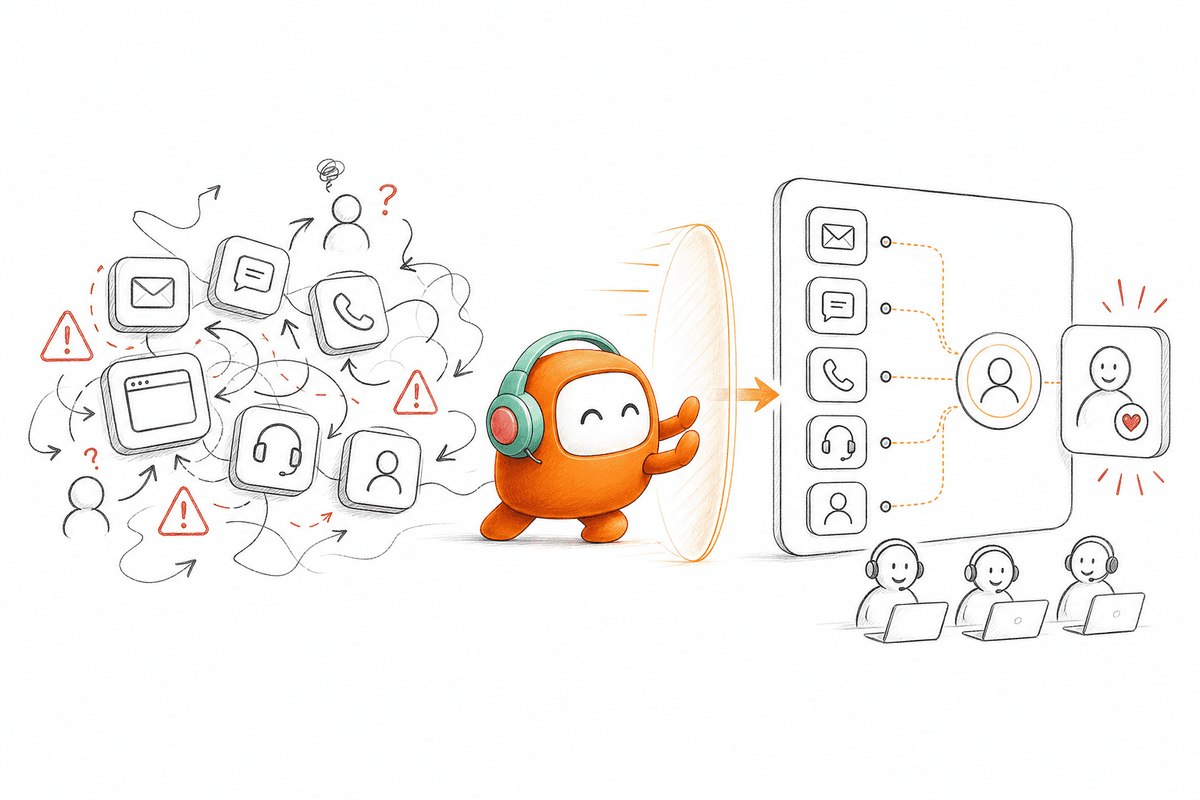
Most revenue stacks were assembled one requirement at a time. The CRM stores the lead, a form captures the inquiry, a dialer handles calls, and another tool sends SMS or WhatsApp messages. Human reps then fill the gaps by checking records, copying notes, and deciding what should happen next. The customer experiences one conversation, while the company manages several disconnected workflows.
Fragmentation becomes visible when a lead changes channels. Someone may begin in web chat, continue by phone, and reply later through SMS. If each channel holds a separate history, the rep cannot see what the person already asked or promised. The customer repeats the same details, and the rep spends the opening minutes reconstructing context instead of moving the opportunity forward.
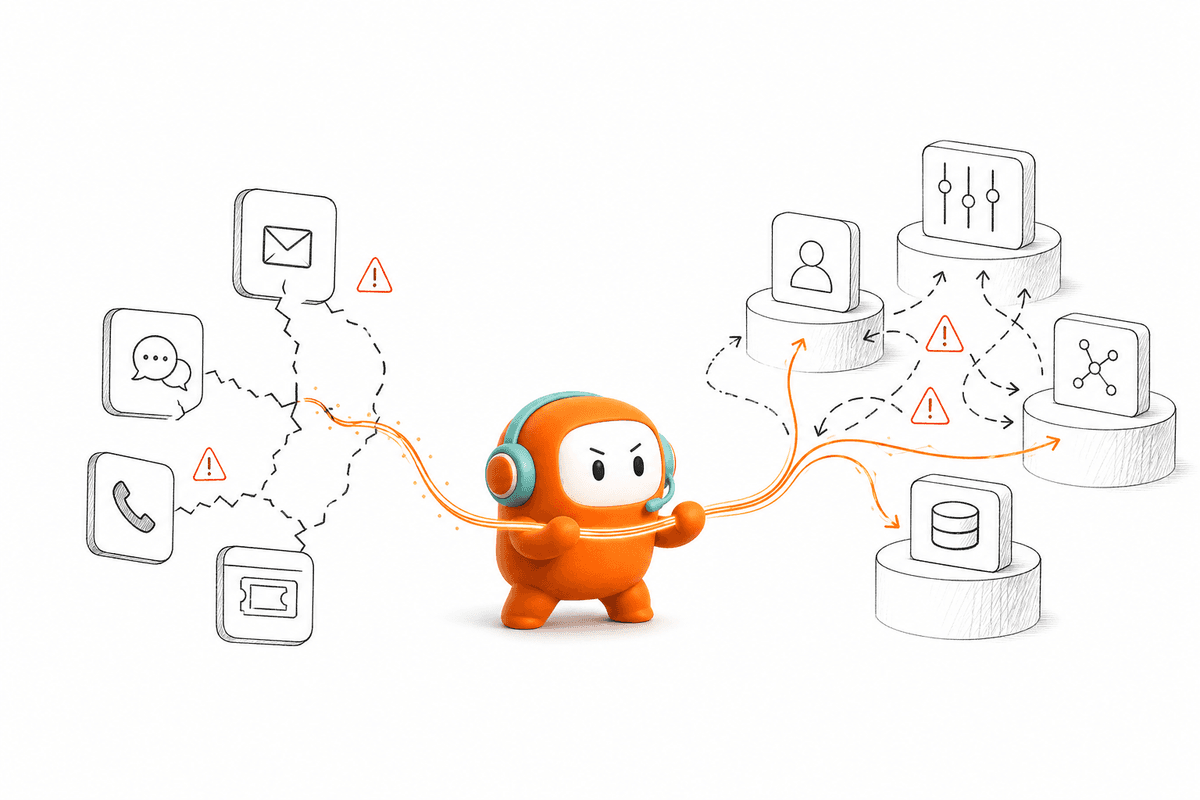
The same problem drags down outbound campaigns. A call outcome may not stop a scheduled message. An opt-out recorded in one system may not reach another workflow. A qualified response may sit in a campaign queue because routing lives somewhere else. None of those failures come from poor conversation quality. They come from systems that cannot coordinate ownership, and they show up directly as lower contact rates and wasted attempts.
More tools can make the problem harder to see. Each dashboard reports activity inside its own boundary, so call volume looks healthy, message delivery looks healthy, and CRM tasks look complete. Revenue leaders still cannot answer a more important question: did the right customer receive the right follow-up, and did the workflow reach the intended next step?
How Revenue Teams Improve Execution
Better revenue execution starts by treating the customer journey as one connected workflow. A lead response is not complete because an email was delivered. Qualification is not complete because questions were answered. An outbound call is not complete because someone picked up. Each interaction should update the customer record, determine the next action, and preserve enough context for either AI or a human to continue.
Respond While Customer Intent Is Current
Speed-to-lead is often discussed as a sales metric, but the operational mechanism matters more than the timer. An inbound lead can arrive through a web form, phone call, live chat, SMS, or WhatsApp. If that lead waits for manual assignment before anyone responds, interest can weaken before the first real conversation begins. First response speed is also a contact-rate lever: the sooner you reach out, the more likely the person is still near their phone and still thinking about the reason they inquired.
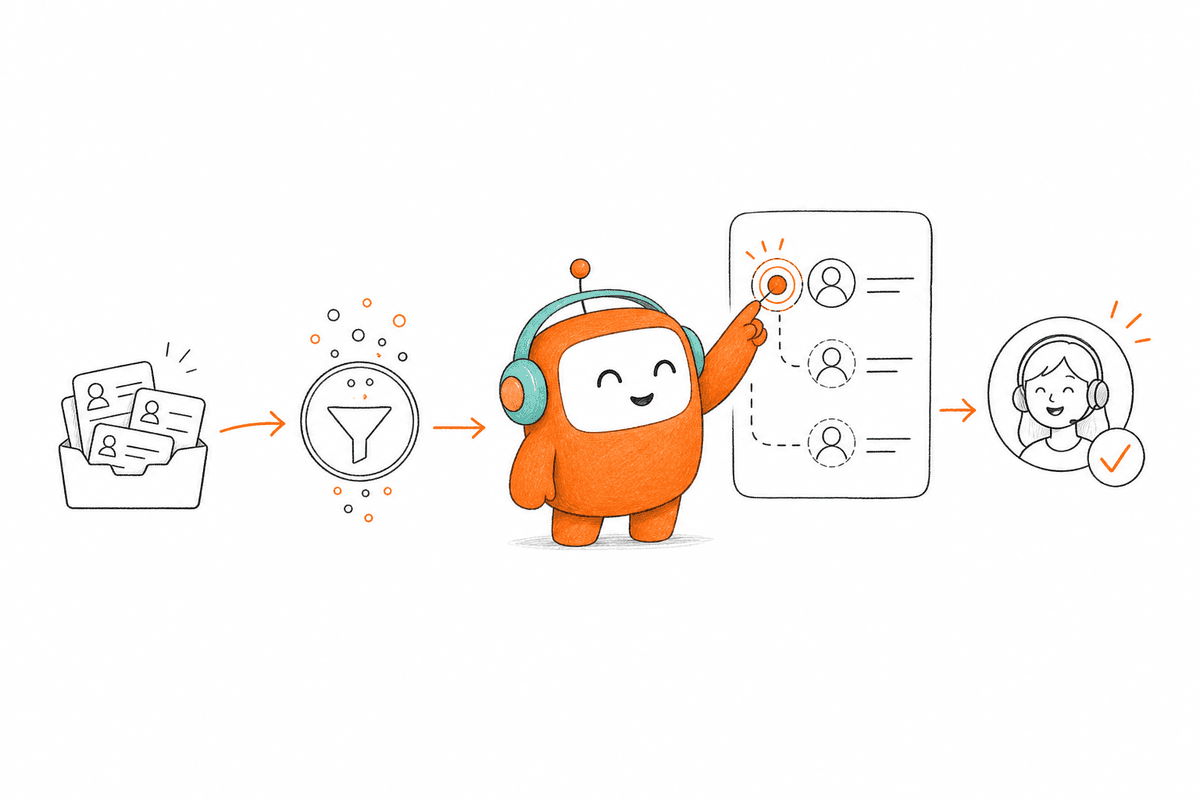
An AI-supported workflow can respond when the lead arrives, ask qualification questions based on company-defined criteria, and choose the next path. Qualified leads may be routed to a sales rep, transferred into a live conversation, or sent into a booking flow. Leads that do not fit can receive an appropriate response without using a rep's time. The business still defines the qualification logic; AI executes it consistently.
That distinction matters. Revenue strategy should remain with the company. The system should not invent qualification criteria or decide which market deserves attention. Its role is to apply the approved rules and move each lead toward the correct owner.
Sequence Channels and Timing to Reach More People
Contact rates rise or fall on when you try and how you switch channels, not just how many attempts you make. A call at the wrong hour, a second call five minutes after the first, or a channel the customer never checks all burn attempts without reaching anyone. Sequencing decides whether the same number of attempts reaches half your list or most of it.
A connected workflow can order attempts across voice, SMS, WhatsApp, and email based on what the customer has already responded to. If someone answered on SMS before, the next attempt can start there. If a call went unanswered at 10am, the retry can move to a different window rather than repeating the same failed slot. Retry logic should also respect gaps between attempts and configured contact windows, so the program keeps trying without becoming the reason a customer opts out.
The point is that channel order, timing, and retry spacing are the mechanics that move connect rates. When those decisions live in one workflow instead of scattered across separate tools, the program can adjust each next attempt based on the last outcome rather than firing every channel blindly.
Connect Inbound Interest With Outbound Follow-Up
Inbound and outbound are usually purchased as separate software categories. Customers do not care about that distinction. Someone who submits a form, misses the first call, replies by SMS, and later returns through web chat is still one customer with one history.
Revenue teams need outbound activity to use the context gathered during inbound conversations. Prior questions, qualification answers, call outcomes, and contact preferences should influence the next step. Without that connection, personalization becomes cosmetic. A message may contain the customer's name while ignoring everything the customer has already said. That gap also wastes attempts: reaching out on a channel someone already abandoned lowers the chance of a real connection.
A connected model also gives outbound workflows clear exit conditions. A campaign can stop or change direction when someone books, opts out, answers a qualification question, or needs a human. Campaign volume alone does not create better execution. The workflow has to react to the conversation, and every attempt saved on someone who already converted is an attempt available for someone you still need to reach.
Give Operations Control Over Daily Changes
Revenue workflows change too often to depend on an engineering queue for every adjustment. Qualification criteria change, sales coverage changes, messaging needs review, and campaign timing may need correction. When every update requires code or vendor intervention, the workflow falls behind the business, and contact-rate fixes like a better call window or a new retry rule wait in a backlog.
No-code configuration matters because operations teams need control. Plain-language settings and visual builders can let them adjust conversation flows, outbound sequences, routing rules, tone, and escalation paths. Preview tools and batch tests give the team a way to check changes before publication, while rollback controls provide a path back when an update causes problems.
IT still has an important role in initial integrations and infrastructure. No-code does not mean no implementation work. It means daily operational changes do not need to wait behind unrelated engineering priorities once the core environment is connected.
Preserve Human Ownership for the Hard Conversations
Revenue automation should not remove people from conversations that require judgment. Pricing exceptions, unusual objections, account-specific questions, and sensitive customer situations may need a rep. The important question is whether that rep inherits the conversation or has to restart it.
A full-context handoff gives the human agent the thread, summary, prior history, and suggested next actions. The rep can see what the AI asked, how the customer responded, and why the conversation was escalated. Customers do not have to repeat the entire exchange, and reps can focus on the part that actually needs human judgment. A clean handoff also protects the connection you worked to make: a reached customer who has to explain everything again is a customer you can lose in the transfer.
Escalation rules should also remain configurable. Teams may use unresolved intent, keywords, conversation duration, customer tier, or other approved criteria to determine when a person enters. AI handles repeatable steps, while humans retain control over exceptions and higher-value opportunities.
Why Adding More AI Can Create More Work

The problem is not the intelligence of the model. It is where that model sits. If AI cannot log outcomes, route conversations, trigger follow-up, respect exit conditions, and hand work to a person with context, it is generating responses rather than running customer operations.
Revenue teams should evaluate AI around completed workflow steps. Ask whether the system can qualify the lead against your rules, select the approved next action, update connected records, and preserve ownership across channels. Conversation quality matters, especially for voice. But a natural voice that leaves the rep with manual cleanup has only moved the workload.
The strongest operating model is human plus AI, not AI beside humans. Both need access to the same knowledge, conversation history, and workflow state. Otherwise, AI becomes another queue for operations to monitor.
How Revve Connects Revenue Conversations to the Work
Revve brings inbound support and outbound engagement into one customer operations platform. Voice, chat, SMS, email, and configured messaging channels can feed the same conversation layer, allowing AI agents and human agents to work from shared context. The product is not just a chatbot, dialer, helpdesk, or AI layer attached to another system.
For outbound contact rates specifically, this shared layer is what lets timing and channel order react to each outcome. Teams can configure multi-step campaigns across calls, SMS, WhatsApp, other supported messaging channels, and email, with the sequence, retry spacing, and exit conditions set by the business rather than invented by the AI. For inbound, Revve can respond to leads, ask qualification questions, evaluate answers against company-defined criteria, and route the next step, so the first response happens while intent is still current.
Operations teams manage Revve workflows through no-code configuration tools. They can adjust scripts, sequences, routing, tone, business rules, and escalation paths, then preview changes, run batch tests, and roll back when required. If your current lead process depends on vendor tickets for routine campaign changes, book a demo to review how those workflows can be managed inside Revve.
When a conversation requires a rep, Revve moves it into the shared agent workspace with its history and AI-generated guidance. Human agents can review the existing thread, approve sensitive messages where configured, and continue without switching into a disconnected system. AI does not replace human ownership; it takes the repeatable work and passes exceptions to the right person.
Revve can also connect with CRM systems through available integrations, APIs, webhooks, and data synchronization. The CRM can remain the system of record for accounts and opportunities, while Revve manages the conversation and workflow layer around those records. Transcripts, qualification data, and operational outcomes can be written back to connected systems.
Where the Platform Fits, and Where It Does Not
Revve is designed for mid-market and enterprise teams with meaningful customer-conversation volume. It is a stronger fit when revenue operations involve several channels, inbound plus outbound work, human handoffs, or pressure to reduce vendor sprawl. Teams under 20 seats or companies with low conversation volume may find a smaller point tool easier to manage.
A company that only wants a homepage FAQ bot probably does not need a customer operations platform. The same applies to engineering teams that want to build and maintain every model choice, prompt, integration, and workflow path themselves. Revve is implementation-led software for organizations that want operational control without owning every technical layer.
Revenue teams also remain responsible for their sales strategy, consent practices, disclosures, and legal review. Revve can apply configured contact windows, do-not-call rules, opt-out handling, and approval workflows, but the customer defines the policies and retains the legal obligation. Those controls matter for contact rates too, because a program that ignores contact windows and opt-outs eventually gets blocked or reported, which lowers reach over time.
For pricing and packaging, including setup and how usage is measured against unique customers reached, talk to the Revve team. Deployment options, including cloud and on-prem, and typical implementation timelines depend on your workflow and integration requirements, so confirm those specifics during the demo rather than assuming a fixed path.
Revenue Improvement Is an Operating Model Decision
Revenue leaders do not need another dashboard showing that activity happened. They need a system that shows where each customer is, what has already occurred, who owns the next action, and whether that action was completed. Better messages cannot compensate for broken ownership between tools.
The practical decision is whether to keep adding AI around a fragmented stack or bring customer conversations into one operating layer. Inbound interest and outbound follow-up belong in the same system because they are parts of the same customer relationship. Human agents and AI agents need shared context for the same reason.
Contact rates improve when qualification leads to routing, routing leads to a well-timed follow-up, and each next attempt changes according to the customer's last response. AI becomes useful when it can execute that work, know its boundaries, and hand the conversation to a person when needed.
FAQ
How do I improve my outbound contact rates?
To improve outbound contact rates, focus on sequencing your outreach attempts. Start by analyzing when your previous attempts were successful and adjust your timing accordingly. For instance, if a call went unanswered, try reaching out again at a different time or switch to another channel like SMS or email. Additionally, ensure that your messaging is personalized based on prior interactions to maintain context and relevance. Using Revve can help you manage these multi-step campaigns effectively across various channels.
What if my leads go cold before I can respond?
If your leads are going cold, consider implementing an AI-supported workflow that allows for immediate responses as soon as a lead is captured. This can involve setting up automated replies that ask qualification questions and route qualified leads to sales reps quickly. By responding while the lead's intent is still fresh, you increase the chances of a successful connection. Revve’s capabilities can help streamline this process, ensuring that leads receive timely follow-ups.
Can I customize my outreach campaigns easily?
Yes, you can customize your outreach campaigns by using no-code configuration tools that allow you to adjust scripts, sequences, and routing without needing technical support. This flexibility is crucial for adapting to changing business needs, such as modifying qualification criteria or messaging based on campaign performance. With Revve, you can preview changes and test your campaigns before launching them, ensuring they align with your operational goals.
When should I escalate a conversation to a human agent?
You should escalate a conversation to a human agent when the AI encounters complex issues that require judgment or empathy, such as pricing exceptions or sensitive customer situations. Setting clear escalation triggers based on customer sentiment or specific keywords can help determine when a human should take over. With Revve, the transition is seamless, preserving the conversation context so the customer doesn't have to repeat information.
Why does my team struggle with fragmented customer interactions?
Fragmented customer interactions often occur when different tools manage various communication channels, causing agents to lose context. To address this, consider consolidating your customer operations into a single platform like Revve, where all interactions—whether via voice, chat, or SMS—are tied to one customer thread. This ensures that both AI and human agents have access to the same conversation history, reducing the need for customers to repeat themselves and improving overall service quality.