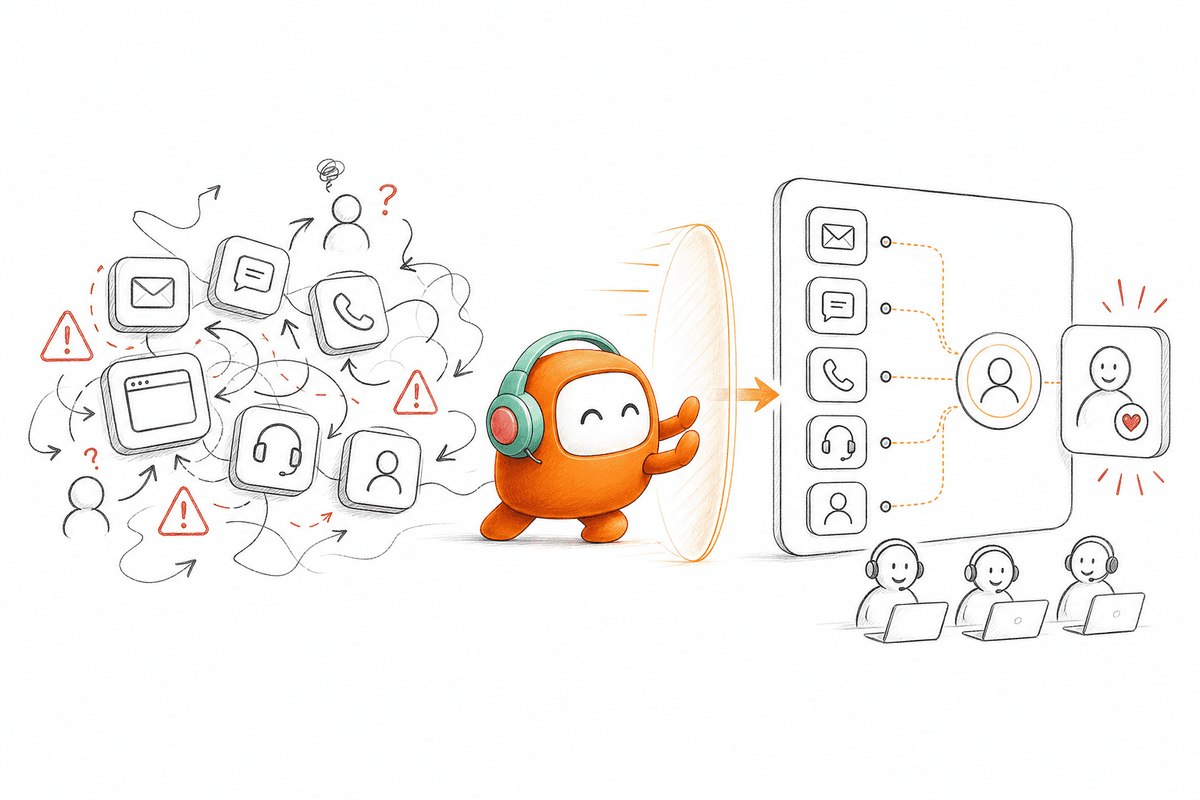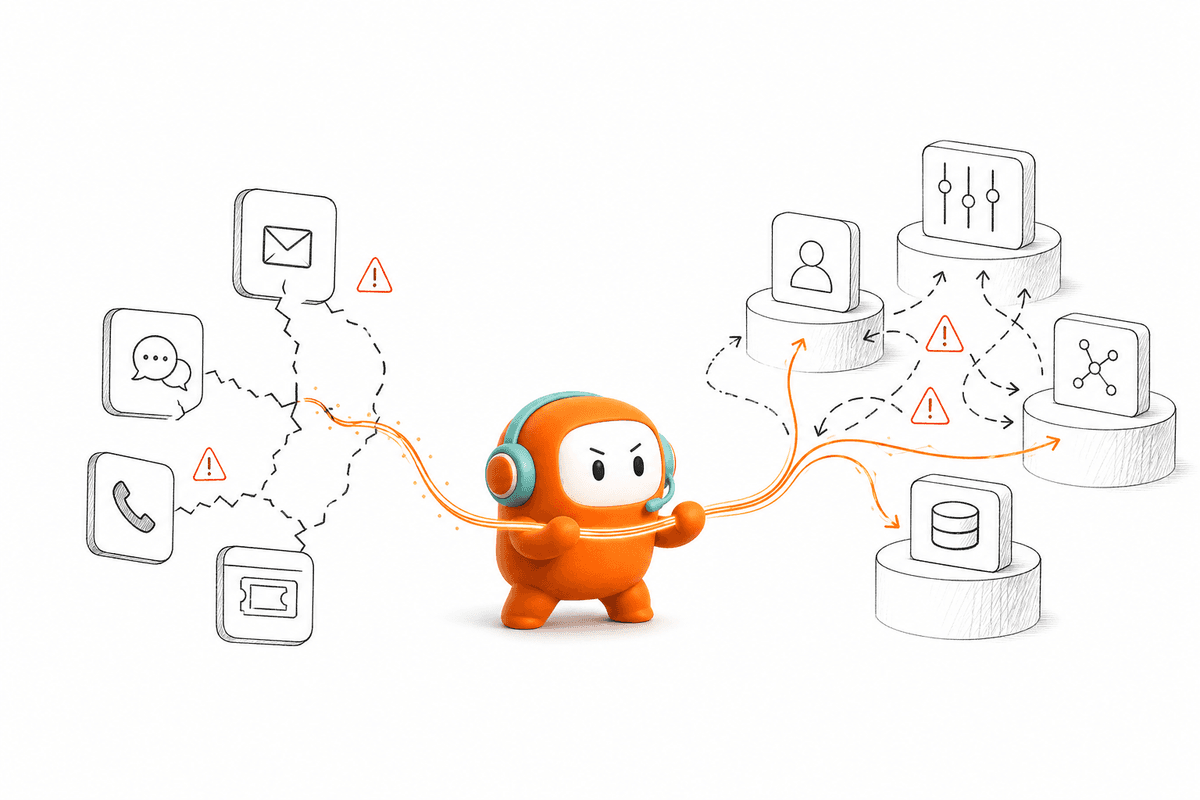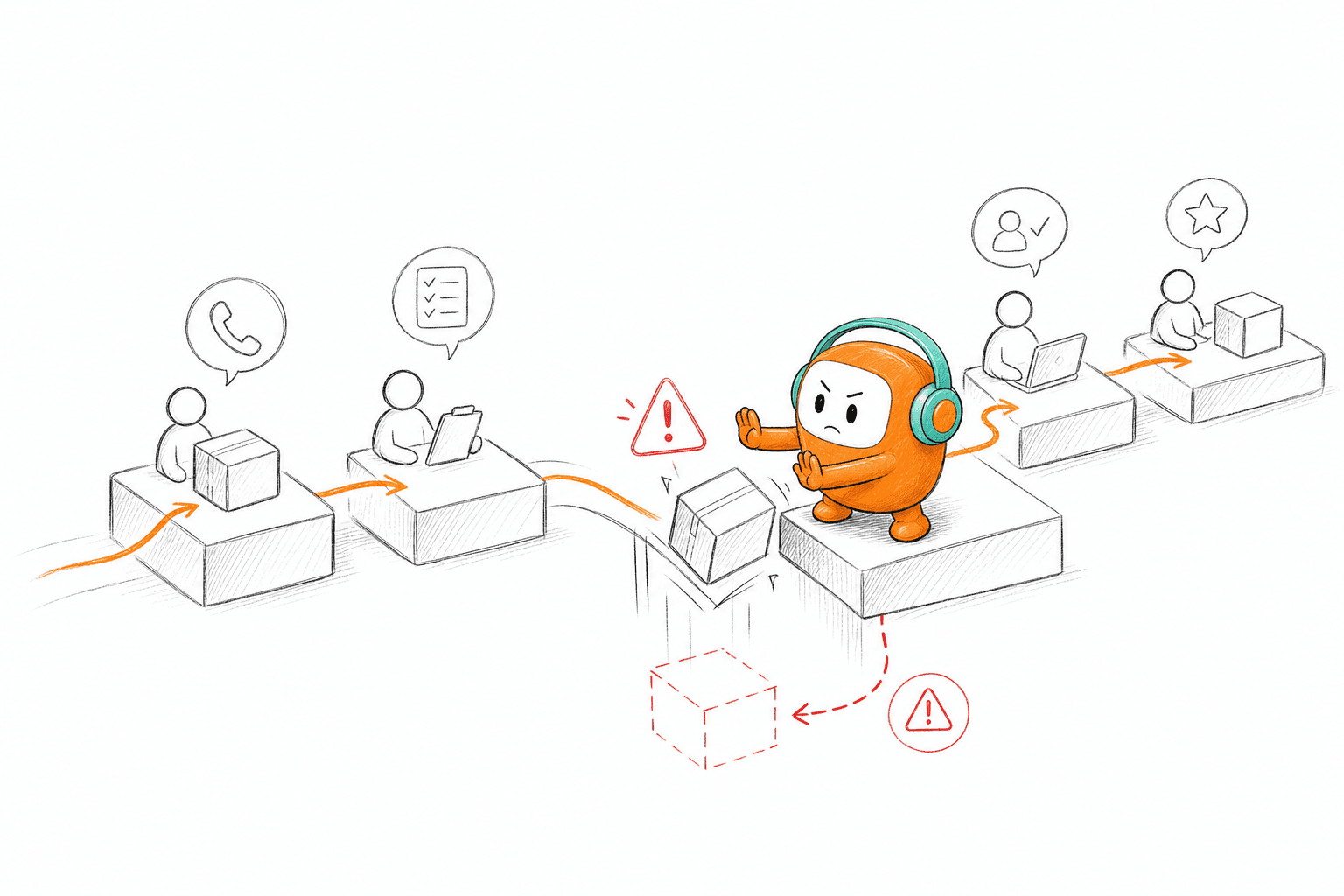
A collector confirms a payment plan at 10:12 a.m., but the reminder sequence keeps calling because the status never reached the campaign tool. You saw the same failure this week if an account moved between a dialer, payment system, inbox, and spreadsheet before anyone knew it was resolved. Most debt collection workflow mistakes happen after contact, not during it.
Collection automation is still judged by calls placed or messages sent. Those numbers are easy to report and rarely show whether the customer actually resolved the balance. The future of collection operations isn't fewer humans. It's a clearer division of labor, where AI handles repeatable workflow steps and people take over when judgment, negotiation, or empathy matters.
Key Takeaways:
- Measure resolved balances and kept payment plans, not raw contact attempts.
- Keep calls, messages, account states, and human handoffs tied to one customer record.
- Stop follow-up as soon as payment, a plan, an opt-out, or a dispute changes the account state.
- Define identity checks before sharing balance details or payment options.
- Escalate based on specific triggers instead of waiting for the customer to ask repeatedly.
- Test complete customer journeys, including missed calls and broken promises, before launch.
Why Collection Workflows Fail After Contact

A Completed Conversation Can Leave an Open Account
At 9:05 a.m., a customer answers a payment reminder and agrees to a plan. The collector records the arrangement in the servicing system, but the outbound tool still shows “no payment.” At noon, an SMS asks for the full balance. By 4 p.m., the customer has called support to complain, and an agent is piecing together what happened across three screens.
Nothing failed inside the original conversation. The failure happened between the promise, the account update, and the next scheduled action. Collection workflow errors often hide in those gaps because every individual tool reports that it did its job. The dialer made the call, the agent recorded the plan, and the messaging tool sent its reminder. The customer still received the wrong experience.
A debt collection workflow behaves like a chain of custody. Each outcome must pass cleanly from contact to account state to the next action, or the team loses control of the case. One missing event can turn a resolved conversation into another complaint, another review task, and another avoidable contact.
More Automation Can Produce More Manual Review
Automation has real value in collections. It can handle repeatable reminders, cover more accounts, and give customers a way to respond outside normal working hours. On a small portfolio with one channel and simple account states, separate tools may even be manageable. That approach starts breaking when customers move between calls, SMS, payment arrangements, disputes, and human agents.
The hidden cost isn't just extra clicks. Supervisors spend time checking why a paid account received another message. Agents reopen call recordings because the disposition doesn't match the servicing record. Compliance teams review contact attempts without a complete thread, while customers repeat details they already gave to the AI or another collector.
Frankly, adding another bot won't fix that. If the bot sits outside the payment record and human queue, it becomes another source to reconcile. Fixing debt collection workflow mistakes requires one definition of account state, one owner for each next action, and a clear point where AI must hand the conversation to a person.
How to Fix Debt Collection Workflow Mistakes
Fixing debt collection workflow mistakes starts with mapping the full path from account enrollment to a confirmed resolution. Every contact should read the latest account state, produce a defined outcome, and trigger one allowed next action. Anything outside that path needs either a stop rule or a human owner.
Audit Broken Handoffs Before Rewriting Scripts
Five questions can tell you whether the workflow is broken before you change a single message. Does a payment stop every active sequence? Can an agent see the call and later SMS in one thread? Does a dispute block further collection language? Can the system distinguish “promised to pay” from “payment received”? Does a human receive the reason for escalation?
A “no” to any two questions means the script probably isn't your first problem. Check the handoffs between systems, the event timing, and the ownership of unresolved states. If an account update takes more than five minutes to reach the next channel, treat it as a workflow break during testing. Customers don't care which integration was late.
Review a sample of at least 20 completed and interrupted journeys, including:
- Accounts paid during the first contact
- Payment plans created but not yet funded
- Customers who dispute the balance
- Missed calls followed by a message
- Escalations that move from AI to a collector
The useful metric is state accuracy. At each point, ask whether the next action reflects what the customer just did. If it doesn't, rewriting the opening line won't matter.
Verify Identity Before Presenting Resolution Options
Identity checks should happen before an automated collection conversation exposes a balance, due date, payment method, or plan option. The exact verification method belongs to your legal and risk teams, but the workflow order shouldn't be vague. Contact comes first, verification follows, and account-specific discussion begins only after the required checks pass.
Failed verification needs its own route. Repeating the same questions can frustrate a real customer, while lowering the threshold creates risk. After the approved number of failed attempts, stop the automated path and send the case to a human queue with the interaction history attached. Don’t force the AI to improvise around an identity problem.
A practical sequence looks like this:
- Confirm the intended person: Use the approved identifiers and disclosure language.
- Record the verification outcome: Passed, failed, abandoned, or transferred must be separate states.
- Reveal only permitted account data: Keep unverified conversations away from balance details.
- Route exceptions: Send mismatches and uncertain cases to a trained person.
Some teams worry that added checks reduce completion. That concern is valid. A shorter conversation can convert better, but a fast payment flow is useless if it exposes information to the wrong person. Remove unnecessary questions without removing the required boundary.
Give Every Conversation a Defined Outcome
A payment recovery conversation needs more than “answered” and “not answered.” Those labels describe contact, not resolution. The workflow should know whether the customer paid, created a plan, disputed the account, requested a person, opted out, or asked for time without making a commitment.
Each outcome must change what happens next. A completed payment closes the active sequence. A payment plan moves the account into plan monitoring. A dispute blocks standard reminders and enters a review path. An unclear response shouldn't be converted into a promise simply because the model heard positive language.
Before launch, document each outcome in plain English:
- Paid: Payment was completed and the active recovery sequence stops.
- Plan created: Terms were accepted, and follow-up depends on plan status.
- Promise recorded: A stated commitment exists, but payment hasn't arrived.
- Dispute or exception: Standard outreach pauses and a human reviews the case.
- No resolution: The next approved contact follows the defined timing rule.
- Opt-out: The restricted channel stops according to the configured policy.
The distinction between a promise and a payment matters more than many teams expect. Combining them makes performance look better while leaving accounts unresolved. In my view, any dashboard that can't separate those states is reporting conversation activity, not payment recovery.
Build Follow-Up Around Account State
Follow-up should respond to the latest customer outcome, not continue because another attempt remains in the sequence. Attempt-based campaigns are easy to configure: call on day one, send a message on day two, and call again on day four. They also create the most common debt collection workflow mistakes when new account data doesn't cancel old steps.
State-based follow-up works differently. Every action checks the current account state before contact. A payment stops outreach. A new plan changes the message and timing. An opt-out blocks the affected channel, while a dispute routes the case for review. No scheduled step gets permission to ignore a more recent event.
Use four checks before every follow-up:
- Has the balance or account status changed?
- Did the customer make or keep a payment commitment?
- Did the customer dispute, opt out, or request a person?
- Is the planned channel and contact time still allowed under the configured policy?
One-channel recovery can work for simple portfolios, and it may be cheaper to operate. The limitation appears when customers don't answer calls but will respond to SMS or messaging. In those cases, use a defined channel sequence tied to the same record instead of running separate campaigns that don't know about each other.
If you want to inspect how a shared record carries the call outcome into the next message, payment option, and collector handoff, book a demo around one real recovery journey from your operation.
Escalate When Judgment Becomes the Work
AI should handle repeatable steps, while humans own conversations where judgment changes the outcome. A customer asking for the payment link again doesn't need a collector. A customer disputing the debt, describing hardship, rejecting the available plan, or showing rising frustration probably does.
The handoff must include more than a transfer label. Give the collector the full conversation, verification state, account context, stated objection, and action already attempted. Without that context, the customer starts over and the collector spends the first minutes rebuilding history. That isn't escalation. It's a reset.
Set observable escalation triggers such as:
- A dispute or account mismatch
- Repeated failed verification
- A plan request outside approved options
- Negative sentiment combined with no progress
- A direct request for a human
- An unresolved conversation beyond the approved duration
Aggressive automation may reduce manual contacts, and that can look efficient on a weekly report. The tradeoff is worse exception handling if the AI stays in control too long. A better division of labor sends routine work to machines and protects human time for the cases where a person can actually change the result.
Test Complete Journeys, Not Isolated Messages
Testing one script proves very little. Collection workflows fail when an event changes the next action, so testing must cover full journeys across calls, messages, payment outcomes, and handoffs. A natural voice means nothing if a completed plan still triggers a demand for the full balance the next morning.
Run tests with production-like account states and named owners watching each transition. Operations should verify the message and route. Technical teams should verify ingestion and write-back. Legal or compliance teams should approve policies, disclosures, consent rules, contact windows, and opt-out behavior. The platform can enforce configured rules, but it can't decide the company’s legal obligations.
Before launch, test at least these paths:
- Payment during the first conversation: Confirm that every pending outreach step stops.
- Plan created but first payment pending: Confirm the account enters the correct monitoring state.
- No answer followed by SMS: Confirm the message uses the latest account data.
- Dispute during an AI call: Confirm standard outreach pauses and a human gets full context.
- Opt-out on one channel: Confirm the configured restriction is applied before another attempt.
- Broken integration: Confirm the workflow fails into review rather than sending an uninformed message.
Testing has a real cost. It takes people away from live work and can delay launch. Skipping it costs more because workflow errors multiply across every enrolled account. The correct launch gate isn't “the AI completed a call.” It’s “every tested outcome produced the right account state and next action.”
How Revve Runs Payment Recovery Workflows
Revve runs payment recovery as a customer operations workflow rather than an isolated dialer campaign. Built-in voice, SMS, email, and configured messaging channels can share the same customer thread, rules, and human workspace. Cloud and on-prem deployment options support different operating and regulatory requirements.
One Record Across Outreach and Resolution
Revve’s Collections and Payment Recovery configuration connects outreach with the outcome that follows. AI agents can call, text, or message past-due customers using approved scripts and configured rules. During the same conversation, a customer can make a payment, create a plan, or request a human agent rather than being sent into a separate queue without context.
Outbound Orchestration manages the sequence across supported channels, including the timing and exit conditions for each step. With Revve, calls and messages remain connected to the same customer history, so human collectors can see what was said and what action was taken.
The platform isn't a replacement for the servicing or billing system. Those tools remain the source of truth for balances and account status. Revve acts as the customer conversation and workflow layer around them, using integrations, APIs, webhooks, or data sync to receive account context and send outcomes back.
Configured Controls With Human Handoff
Revve evaluates configured controls before outbound contact, including consent status, contact windows, do-not-call restrictions, and opt-out requirements. Approval workflows can hold sensitive AI-drafted messages for human review before sending. Interactions, approvals, and rule evaluations are logged for auditability.
Smart Escalation moves disputes, complex cases, and defined exceptions into the Unified AI and Human Workspace. The collector receives the conversation thread, summary, prior history, and suggested next actions in the same environment. Human agents stay responsible for judgment, while AI continues handling approved, repeatable payment recovery work.
Operations teams can also adjust scripts, routing, escalation rules, tone, and campaign logic through no-code configuration tools, then preview and test changes before publishing. Regulated production deployments may use on-prem infrastructure where required, while other deployments may use cloud. Legal interpretation and regulatory approval still belong to the customer.
Build Payment Recovery Around Resolution
Fewer collection workflow mistakes start with one basic change: stop treating contact as the finish line. A call, SMS, or AI conversation only matters when it produces the correct account state and the correct next action. Build around verification, payment outcomes, stop rules, and full-context escalation.
AI can take repeatable work off the collector’s queue, but it shouldn't own every conversation. Give machines the defined steps and give people the exceptions. That division of labor creates a payment recovery operation customers can resolve in one conversation without losing human judgment when it matters.
FAQ
How do I ensure follow-ups are timely after a payment plan is set?
To ensure timely follow-ups after a payment plan is set, you can: 1) Use Revve's Outbound Orchestration to automate follow-up messages and calls based on the payment schedule. 2) Set up triggers in your workflow that stop any further outreach once a payment plan is confirmed. 3) Regularly audit your workflows to confirm that all account states are updated in real-time, preventing unnecessary reminders after a plan is agreed upon.
What if a customer disputes a charge during a call?
If a customer disputes a charge during a call, you should: 1) Use Revve's Smart Escalation feature to transfer the conversation to a human agent while retaining the full context of the interaction. 2) Ensure that the dispute blocks further collection outreach until the issue is resolved. 3) Document the dispute in the customer record so that all team members have access to the latest information.
Can I customize the messaging for different customer segments?
Yes, you can customize messaging for different customer segments using Revve's no-code configuration tools. 1) Define specific messaging frameworks based on customer profiles or behaviors. 2) Use the omnichannel conversation management feature to ensure that messages are tailored to the channel being used, whether it's SMS, email, or voice. 3) Test different messaging approaches to see which resonates best with each segment before rolling them out.
When should I escalate a conversation to a human agent?
You should escalate a conversation to a human agent when: 1) The customer expresses frustration or dissatisfaction that indicates a need for empathy and judgment. 2) There are repeated failed verification attempts, suggesting the customer may not be who they claim to be. 3) The conversation has reached a complexity that the AI cannot handle effectively, ensuring the customer receives the best possible service.
Why does my team need a unified workspace for AI and human agents?
A unified workspace for AI and human agents is crucial because it: 1) Reduces operational fragmentation by keeping all conversation history in one place, making it easier for agents to pick up where AI left off. 2) Enhances productivity by minimizing the time agents spend rediscovering context. 3) Improves customer experience by ensuring that customers do not have to repeat themselves when transferred to a human agent.